Monday, 22 April 2013

The archaeology of film and fiction


The ancient world and archaeology are huge parts of our history, and so it follows that these aspects would bleed into other parts of our culture as well. The obvious film is Indiana Jones of course, and then there’s Tomb Raider and National Treasure; but I’m not just talking about films that feature archaeology as a major plot design. I’m talking about the more subtle uses – where films include archaeology in the background, as the heritage or culture of the world they have built for that specific film.

Archaeology is seen as something that links us to the past, and as such is created and incorporated into fiction in order to establish this connection and authenticate the history of the imagined world. One of the most famous movies where this is evident is Harry Potter.

Hogwarts grounds [1]

The grounds of Hogwarts have been created to include a stone circle. The fictional magical castle is located in Scotland, and stone circles are very common there (as they are in other parts of Britain). Why was this circle included? It seems to add an aura of history, of longevity and tradition to the site – it gives it credibility.

This is what fantasy films in particular lack – the depth of cultural history and tradition that is embedded within human history and society. Lord of the Rings is another excellent example of this. Tolkien was highly educated, and the richness of his imagination is evident in Middle Earth. Edoras, for example, is clearly a hillfort (in my opinion!), and it’s fun to see Tolkien’s reflection of this and his interpretation of how such a site would have been used and occupied.

Edoras [2]

The locations in Middle Earth all have rich histories associated with them, and many of the sites were influenced in Tolkien’s imagination by aspects of sites and buildings across England. It’s also encouraging that these world builders turn to archaeology in order to create their realities. I think this is a good sign for the perception of archaeology in terms of its relevance to popular culture and modern life - I hope this can be reflected in our political spheres as well.

At the other end of the spectrum is what might be termed ‘the archaeology of film sets’. Staying within the realm of science fiction/fantasy, the Star Wars saga offers us a beautiful example. The desert planet of Tatooine was filmed in the Tunisian desert, and the houses and other structures of the film set still sit in the desert today.

No More Stars © Rä di Martino [3]

The above photo is part of a collection at the Tate Modern called ‘Project Space: Ruins in Reverse’, thinking about the divide between archaeology, fiction and reality. Already they look like ‘credible’ archaeological ruins, all too easily mistaken for the actual remains of past civilisations. And in a way they are – archaeology is the physical remains of past societies, and the Star Wars movies do play their part in modern culture. It is also amusing to think what conclusions future archaeologists might come to when they stumble across the ruins in the future, after all knowledge of them has been lost.


[1] This photo was taken by me at the Harry Potter studios – it’s a small scale replica used in the filming of the movies.
[2] Photo from Lord of the Rings wiki.
[3] For more information, see here. Exhibition runs until the 24th June. 

Monday, 15 April 2013

Itinerant archaeology


Last week I was lucky enough to have a few friends from Cambridge staying with me down in Cornwall. Whilst we did a lot of the more touristy stuff in the area (I can fully endorse the Seal Sanctuary and the Eden Project), I also tried to show them a sliver of Cornish archaeology.

Since Cornwall was (largely) untouched by the Roman invasion, and remains somewhat sparsely populated today, a lot of prehistoric archaeology is still in very good condition. My absolute favourite site in Cornwall is Carn Euny [1] – an Iron Age village that lies some 2 miles off the A30 near Land’s End, at the end of a windy one-track lane.


Although the initial occupation of the site dates to the Bronze Age, the two main building phases date to the (Middle and Late) Iron Age, and occupation continued well into the “Roman” period. As you can see from my photo above, the site is remarkably well preserved and it’s easy to get an idea of what it would have looked like in the Iron Age.

The site also contains a curiosity found only in Cornwall. Dating to the Middle Iron Age is a circular stone chamber, accessed through an underground passage, around 20m long. This is known as a ‘fogou”, and less that 15 have been found in Cornwall, although similar examples (known as souterrains) have been found in Scotland and France. The purpose of the Cornish fogous is unknown, although uses such as hiding places or food stores have been postulated.

The fogou passage [2]

Another nearby site is the prehistoric village of Chysauster, which also contains an example of the Cornish fogou, although this has been blocked off due to safety reasons. The interesting difference between Chysauster and Carn Euny is that the former is actively managed by English Heritage, and adheres to opening hours and an entrance fee. For my friends this meant the site was closed and inaccessible by the time we arrived in the late afternoon, and it’s strange that two near-identical sites are managed so differently.

Whether this is due to Chysauster being slightly easier to drive to, I’m not sure, and it’s worth pointing out that English Heritage also oversees Carn Euny, and there are a few signs dotted around to explain the site (although in my opinion they could include more information). Personally I much prefer the hands-off approach at Carn Euny but obviously this is not always possible.

Another fun past time I like to subject my friends to is “Spot-the-hillfort” – a game to be played when travelling throughout Britain. One of my favourites to point out is Brent Knoll hillfort in Somerset, which dominates the landscape adjacent to junction 22 of the M5. In Prehistory the Somerset levels would have been flooded, so the site itself would have been an island at times, which is also fun to think about.

So wherever you next are in Britain, or the next time you journey down the M5, be sure to keep an eye out for some archaeology!


[1] An interesting side note is that the Cornish word ‘carn’ is a place-name element that translates as ‘heap of stones’, and is found in other places names such as the hillfort of Carn Brea, ‘brea’ meaning hill. So the literal meaning of Carn Brea is ‘heap of stones on a hill’ = a hillfort! Magic. The word ‘dinas’ is also a Cornish word for hillfort, such as Treryn Dinas, a promontory fort.
[2] Images my own.

Monday, 1 April 2013

Aliens

So I’ve been writing this blog for three months now, just rambling about things in archaeology that I find interesting, or what I’ve been reading about recently in relation to my thesis. But now is time for a confession. I’ve been lying to you.

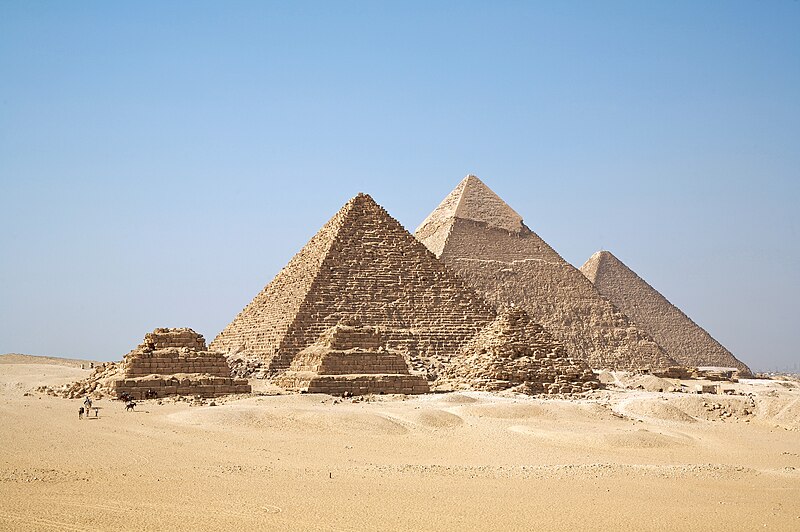
You see, the thing is, it’s all lies. Lies created to make us humans feel better about ourselves, and our intellectual evolution. You think ancient Egyptians built the pyramids? Think again! Of course a primitive society hundreds of years ago didn’t build something that we would struggle with today, even with machinery and computers to help with the heavy lifting and the thinking. Don’t be absurd.


Archaeology is what alien visitors have left on earth.

Obviously.

Some people call this view “pseudoarchaeology” and claims that it lacks any adherence to the scientific method – where is their evidence, what are their methods to test their theories?

But it’s common sense! We’re the underdogs here, we need to make people see sense.

Chariot of the Gods, by Erich von Daniken is one of the seminal works that discusses the truth about archaeology. The author discusses how archaeology represents a higher technological knowledge base than would have existed in prehistory.


How on earth would ancient people have moved the Stonehenge bluestones from Wales, without cars or trucks? There’s no way, of course. And so the only viable conclusion is that they were helped, by visitors from outer space.

This viewpoint is backed up by many clues – take the Nazca lines in Peru, for example. They are obviously made to be viewed from space – they are a form of landing strip – so the visitors knew where to land. The visitors to Peru would have been responsible for Machu Picchu, of course - a great civilisation built at the top of a mountain, the only explanation is aliens.


So next time someone tries to talk to you about ancient civilisations, feel free to ignore them. They clearly don’t know what they’re talking about. It’s all common sense really, and everybody knows that common sense is universal and absolute, and can always be trusted.

----------------------------------

*Disclaimer: none of this is true. Happy April 1st!

Pyramid image from Wikipedia
Stonehenge and Machu Picchu images my own. 

Monday, 25 March 2013

Rowing archaeology - Dorney Lake


For those of you who don’t know, yesterday was the Oxford/Cambridge women’s boat race (Oxford won). Whilst this event had traditionally been held at Henley-on-Thames, this year bad weather caused the event to be relocated to Dorney Lake (and from 2015 it will be held on the Thames with the men’s race).

Dorney is a purpose-built rowing lake, around 2200m long, which took 10 years to fully build (completed in 2006), and it was used as the Olympic rowing course during London 2012. However, before they were allowed to build a lake, archaeologists excavated the area over a period of 18 months in order to ensure no valuable archaeology would be destroyed during the construction process.

The lake is a stone’s throw away from the current course of the river Thames, but this course has changed several times since the last Ice Age, and this has left damp soil in its wake – good for preservation of certain types of archaeological evidence, meaning that it was possible to construct a good site sequence.


Although the area was woodland in the distance past, it has been used for settlement since, although in more modern pre-lake times only fields existed (it would have been hard to get permission to build a rowing lake on top of someone’s house, obviously). The above image shows the full diversity of archaeology found at the site.

The chronology of the site was phased from radiocarbon dates of timber structures (bridges amongst the features found), and human bones found there. A prehistoric field system was visible from the air, as a series of rectilinear enclosures, trackways and pits. These features were concentrated where the main body of the lake is today, so are no longer visible. However, Bronze Age barrows are still visible (image from Google maps below) now, between the lake and the river.


In more modern times the area was used as a ‘Starfish’ bomb decoy for the nearby town of Slough. The starfish worked by the detonation of controlled explosions during an air raid to simulate the effects of an urban area being targeted by bombs – making the bombers think they had hit their target when in reality they were bombing only empty fields.

I haven’t even touched on the wealth of artefact evidence found at Dorney, but one of the highlights of the finds was the oldest scythe found in Britain. It is interesting to think what archaeologists 2000 years in the future might make of the remains of the lake, especially if rowing no longer exists as a sport like it does now.


[1] Parker et al. 2008 “Late Holocene geoarchaeological investigation of the Middle Thames floodplain at Dorney, Buckinghamshire, UK: An evaluation of the Bronze Age, Iron Age, Roman and Saxon landscapes” in Geomorphology 101 pp. 471-483.

Monday, 18 March 2013

Pyramids of Perception


I’d hazard a guess that for pretty much anybody, when you say the word ‘archaeology’ there are certain things that spring to mind – specific items or sites that seem to characterise the essence of archaeology in popular or modern culture; Indiana Jones, Stonehenge, the Pyramids of Egypt. What I love about archaeology is that each of these prevalent associations is just the tip of the iceberg, just the beginning of something bigger.

For starters, I’m sure most people don’t know that the academic Indiana Jones is meant to be influenced by the Marxist Archaeologist, V. Gordon Childe, who proposed a theory of (moderate) cultural diffusion. Indiana Jones obviously didn’t share in Childe’s avoidance of fieldwork, but that’s perhaps a story for another blog.

The Mayans gained quite a lot of popularity/notoriety last year, due to the hype over the end of the Mayan calendar, believe by some to signify the end of the world. Luckily, that didn’t happen, and we were all able to sing in 2013 free of death and destruction. However, the intricacies of the Mayan calendar are just one of many fascinating points about these peoples.

Pyramid at Chichén Itzá

While the Egyptian pyramids might arguable be the most famous, they are not the only ones.[1] There are pyramids and similar sites dotted throughout Mesoamerica.  Why were such geographically disparate people building such similar structures? What lies in the human psyche that fuels this need to build?

It has been suggested that the height of a pyramid creates a separation between the general population that exists at ground level, and any dominating elite/ruler who took their place at the summit. In Mesoamerica this contrast is supplemented by evidence for animal (rarely ever human, if at all) sacrifice found in conjunction with pyramids.

La Pirámide del Sol from below – what’s the difference between the bottom and the top? [2]

Having visited several of these Mesoamerican pyramid sites, it is easy to understand this contrast, but perhaps in a different sense. For example, if the only way you experienced the site of Teotihuacán was from ground level, then on a hot Mexican summer’s day, this experience is far removed from someone who has climbed to the top of La Pirámide del Sol (the largest) – there is a physical and mental division. They also create a very different atmosphere to those in Egypt – which were a separation between life and death.

This week’s blog is not about the archaeological evidence found at these sites, because I can’t claim to know much more than what’s found on Wikipedia. What this week is, is a challenge perhaps, to just think about the way that structures and buildings affect us. Pyramids are huge structures, whether in Egypt or Mexico, and they dominate whatever landscape they are placed in – what does this domination mean for those living under their shadow? And how can we begin to understand what they meant for the people who built them?


[1] The largest pyramid at Giza has a base area of 5.3 hectares – larger than many hillforts.
[2] Images are my own.

Monday, 11 March 2013

Why Iron Man is a problem for archaeologists


One of the problems with studying archaeology is the (necessary?) fact that we are wholly separated from the past that we are studying - making it hard to access the minds and understanding of the people we want to learn about.

For historical archaeology part of this problem is reduced by the use of historical documents, written either by contemporaries, or the people in question themselves. But in prehistory this written source material does not exist. There is no literature that can place us directly in the minds of prehistoric people in Britain.

What do you think of when you hear the word “iron”? Even as an Iron Age scholar, my first thought isn’t necessarily the Iron Age. I think of Iron Man, I think of the Great Swords in the Game of Thrones books (technically “steel”, but that’s an alloy of iron so it’s ok – and an indication of how my mind works). You might think about the Ironbridge Gorge[1] in the Midlands, a UNESCO World Heritage Site called the “Birthplace of the Industrial Revolution”.


My point is that iron and the uses of iron are so widespread nowadays it is hard to separate ourselves from these modern uses and connotations. How can we ever really escape them and fully understand the importance of metal in the Iron Age? Iron Man bares no resemblance to the practicality of iron smelting and metal-making for Iron Age people, and yet it’s still one of the first things that I think of.

I know from school how iron is extracted from its ore, but in prehistory the knowledge of the underlying chemical process was not known. The creation of metal from rock was viewed as a magical transformation. Although this viewpoint was first formed in the Bronze Age, when metalworking was introduced, the creation of iron is perhaps more mystical than that of bronze (an alloy of copper and tin).


Chalcopyrite, the primary copper ore in Britain is already remarkable, it’s already shiny. And it has been suggested that this eye-catching property was one of the things that first attracted prehistoric peoples to the ore.


The main source of iron ore is haematite, grey and dull. It doesn’t possess the same inherent attraction of copper, and yet this seemingly dull rock can still make metal – the transformation is amplified.

This concept of metal-making as a magical process has been discussed repeatedly in archaeology, most notably by Hingley [5] and Taylor & Budd [6]. Our problem as archaeologists is that we’ve lost this connection and belief in magic – we know too much about the science behind the process.  And so this makes it infinitely more difficult to access the minds of prehistoric people, without colouring our interpretations with our own modern connotations.

This problem of truly understanding the minds of past peoples is one of the central challenges in archaeology, and one without a definite solution.


[1] http://www.ironbridge.org.uk/
[2] Iron Man artwork by Salvador Larroca from Wikipedia
[3] Image from the British Geological Survey “Copper Profile”, available here 
[4] Image from Wikipedia
[5] Hingley, R. 1997: Iron, Ironworking and Regeneration: a study of the symbolic meaning of metalworking in Iron Age Britain. In Gwilt, A. and Haselgrove, C. (eds.), Reconstructing Iron Age Societies (Oxford, Oxbow Monograph 71), 9–15.
[6] Budd, P. and Taylor, T. 1995: The faerie smith meets the bronze industry: magic versus science in the interpretation of prehistoric metal-making. In World Archaeology, 27, 133–43.